Direct-to-Consumer Ghanaian businesses I admire, and why young founders should think twice about social enterprises
 Yaw Antwi-Owusu
January 19, 202610 min read
Like many Ghanaians who watch entrepreneur shows such as Shark Tank, I've come to appreciate the level of entrepreneurial ambition displayed by the companies that pitch on these platforms. Most of these businesses are direct-to-consumer, run with conviction, built around clearly defined problems the founders personally experienced, and transformed into products that thousands, and in some cases millions, of people are willing to pay for.
One story I often recall is Souper Cubes, a brilliantly simple solution for storing large batches of stews and soups. After appearing on Shark Tank, the company generated $938,000 in sales within 24 hours. That success made me curious, why aren't more businesses like this being built at scale in Ghana? Especially when, in other developing countries like India, locally produced and locally owned snacks and cosmetics have grown into massive businesses.
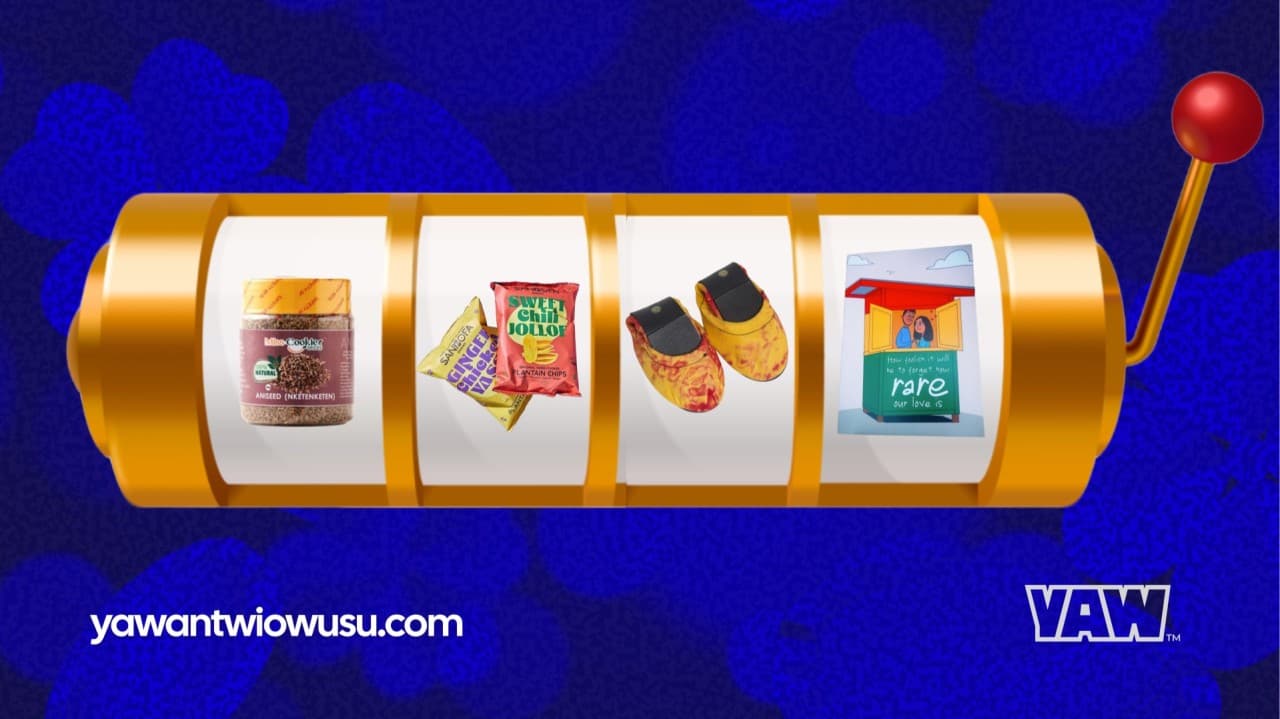
In this note, I write about four direct-to-consumer Ghanaian businesses I admire, companies that feel closest to these Shark Tank-style success stories. I also try to diagnose a key cultural trap that I believe is quietly eating away at the ambition of many young Ghanaian entrepreneurs, a trap I once fell into myself: the "social enterprise and not-for-profit" trap.
Supply chain snapshot
What Makes a Consumer Brand Direct-to-Consumer?
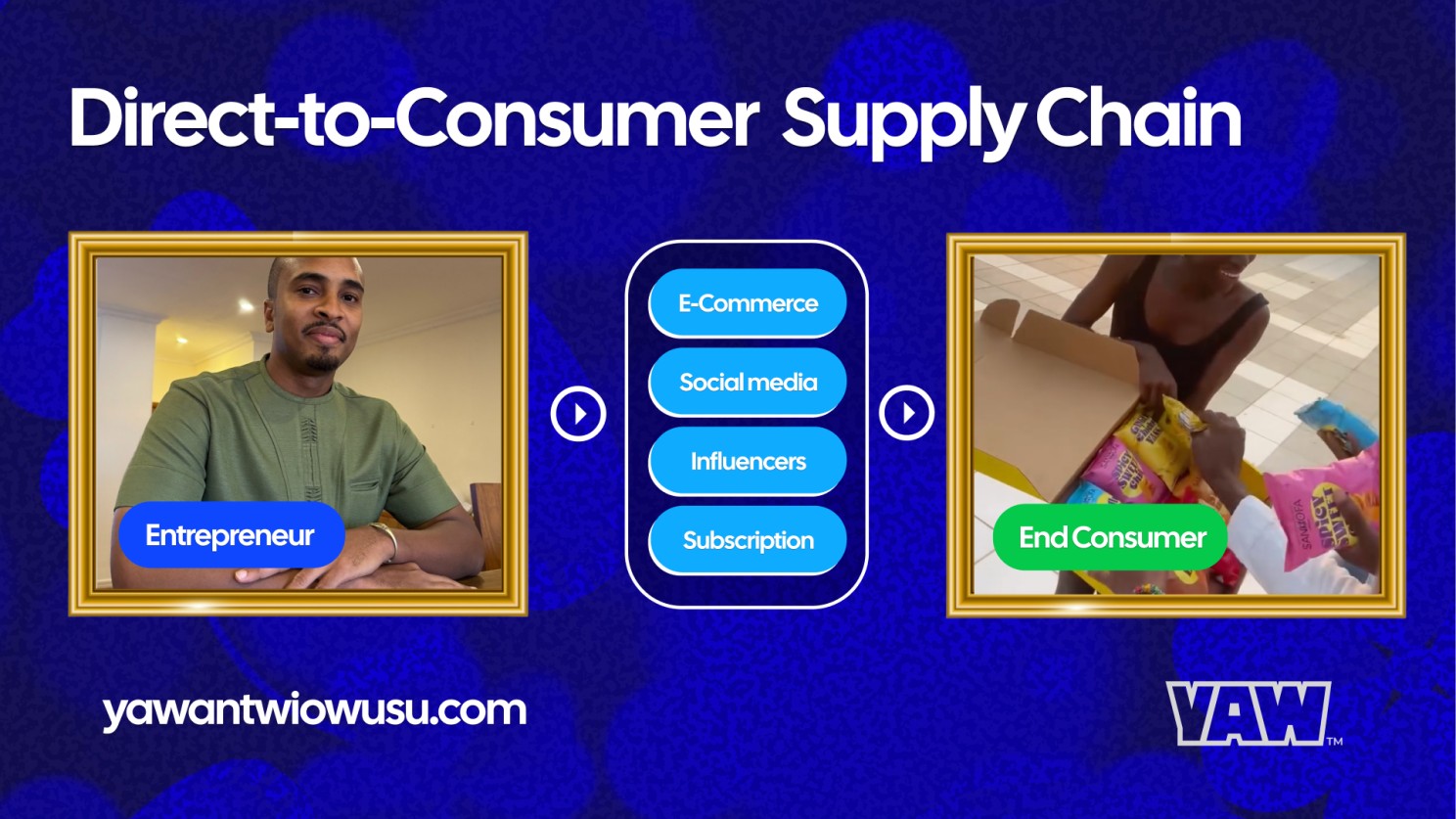
Illustration of DTC Supply Chain. Image credit: Yaw Antwi Owusu.
Before diving into the Ghanaian DTC businesses I admire, it's worth clarifying what makes a consumer brand DTC at its core.
Direct-to-consumer is a distribution model that cuts out wholesalers and traditional retailers, allowing businesses to sell directly to their customers. Most Ghanaian DTC businesses, like their global counterparts, rely on e-commerce platforms, social media, influencer marketing, and in some cases physical stores where customers can access products directly.
At its core, the DTC model gives new entrepreneurs, especially those building mission-led businesses, the power to launch and reach customers without breaking the bank, without relying on institutional retail infrastructure, and with the opportunity to own their brand narrative and customer relationship from day one.
Now that we have a clearer understanding of how the DTC model operates, let's look at four Ghanaian businesses I admire that are using this approach, before examining why the social enterprise model continues to persist.
Miss Cookies
1. Miss Cookies
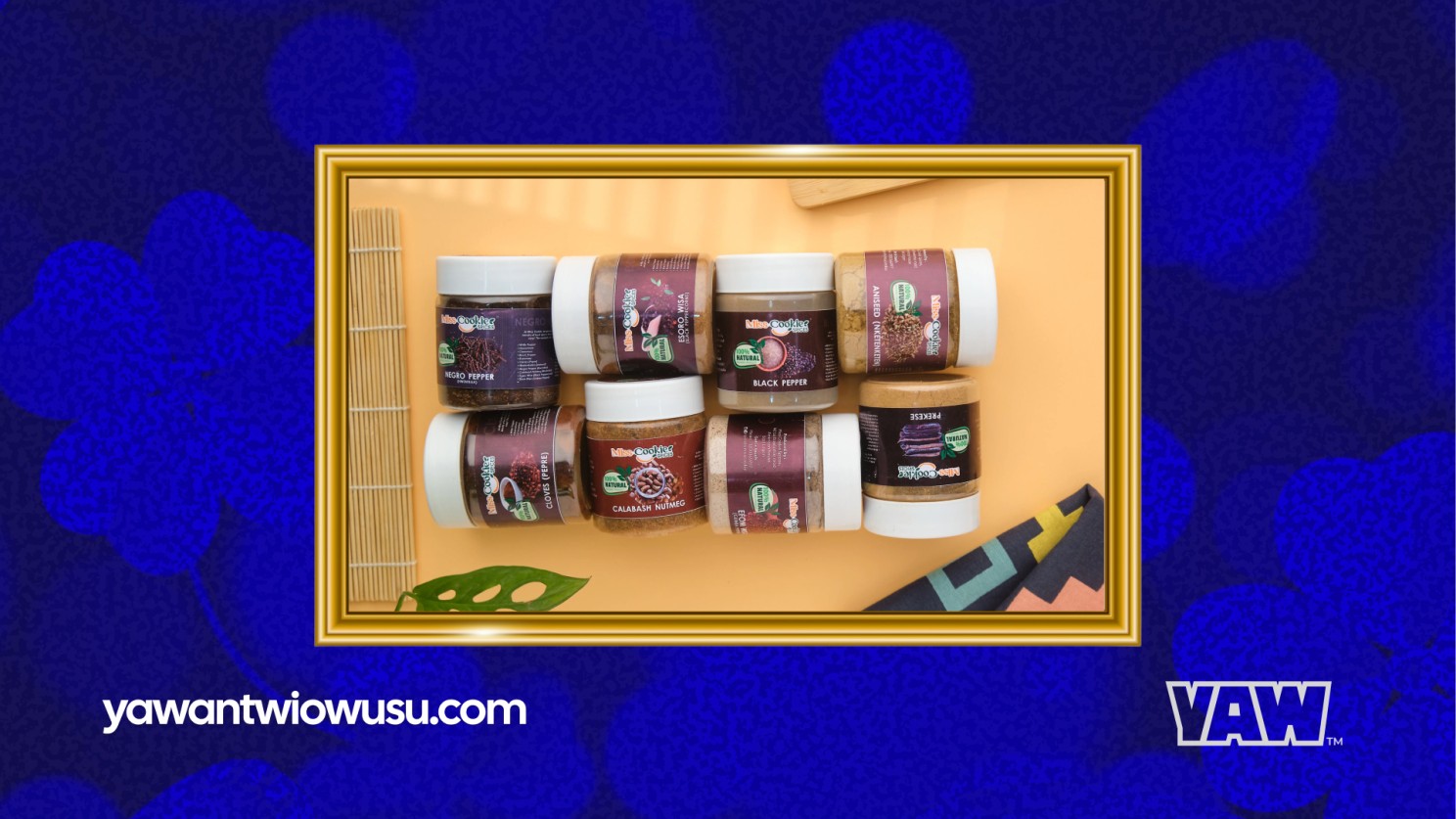
Miss Cookies products: Image source: Miss Cookies.
Miss Cookies is arguably Ghana's biggest homegrown spices brand. Launched in 2017 with a single product, the Miss Cookie Chicken Mix, the business began as a two-person operation producing an average of 25 jars per day. The founders describe that early phase as funny, frustrating, and full of determination to make cooking easier, quicker, and less stressful.
Launching with a DTC approach meant Miss Cookies could serve customers directly from the very beginning. The company recalls that its first customer came through a phone call, a setup that allowed product feedback to flow straight back into the business and directly influence the next production batch. This tight feedback loop helped the brand grow its customer base quickly and intentionally.
Nine years into the journey, Miss Cookies employs over 100 permanent staff, delivers nationwide, and works with a wide network of partners and global resellers. Today, the brand is well positioned to compete with multi-million-dollar FMCG companies. Every time I see their billboards in town, I'm reminded of what a mission-driven, customer-led Ghanaian business can look like, and why it's a model worth emulating for the next generation of founders.
Sankofa Snacks
2. Sankofa Snacks
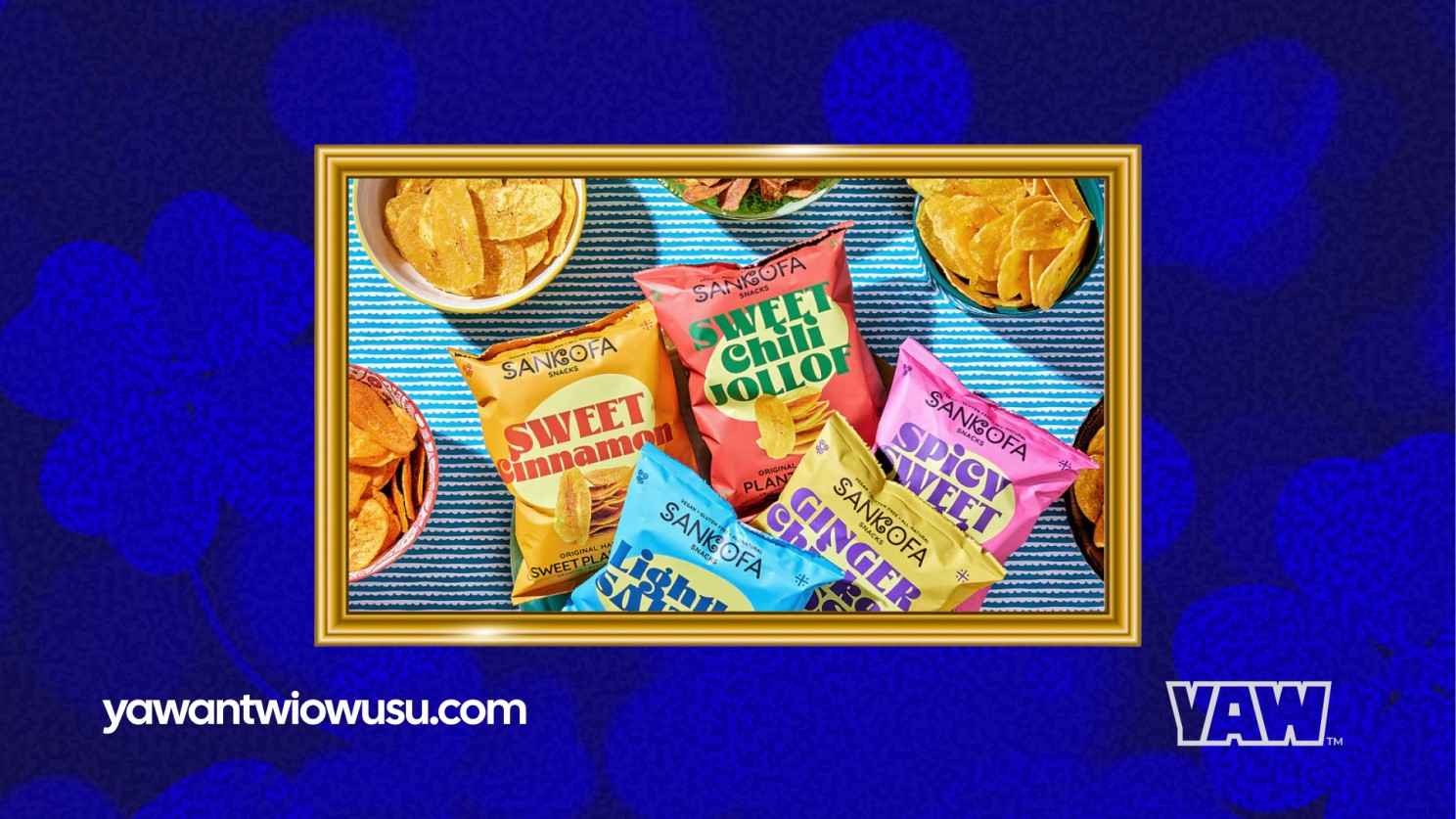
Before founding Sankofa Snacks, Jamie Saleeby had a long-standing interest in the food and beverage industry. He spent years researching and testing snack ideas before settling on a product that was both familiar and universal across cultures: plantain chips. His goal was simple, take a traditional Ghanaian street snack and reimagine it in a structured, scalable way.
In 2017, Sankofa Snacks was born in Accra, Ghana, producing snacks designed to compete with any global brand on a shelf, from food safety standards to flavor variety and creativity. Sankofa Snacks is not a typical DTC brand; its primary distribution channels are third-party retailers and partners. However, the company still sells directly to consumers through its website, where customers can even subscribe to recurring snack deliveries.
In an interview in 2019, the founder described Sankofa Snacks' broader mission — what the company calls a Cultural Revolution, aimed at telling African and African-American stories through the creative arts.
What I admire most about Sankofa Snacks is what they've achieved with a product as simple as plantain chips: selling across continents, offering a wide range of flavors, and operating at food safety standards many local producers once thought impossible.
Today, Sankofa Snacks is distributed across major retail outlets in Ghana, including Melcom and cafés like Vida e, and also exports internationally through platforms like Amazon in the United States.
Love Ankara
3. Love Ankara
In 2014, Emma Maame Efua Tandoh was a Content and Media Manager at Vlisco Netherlands B.V.'s Woodin, a company that produces and distributes fashion fabrics for West and Central African markets and African consumers in global metropolitan cities. One rainy morning on her way to work, she slipped and fell due to a poorly made pair of ballet flats. The accident left her in a knee cast for six months, a period she describes as deeply life-transforming.
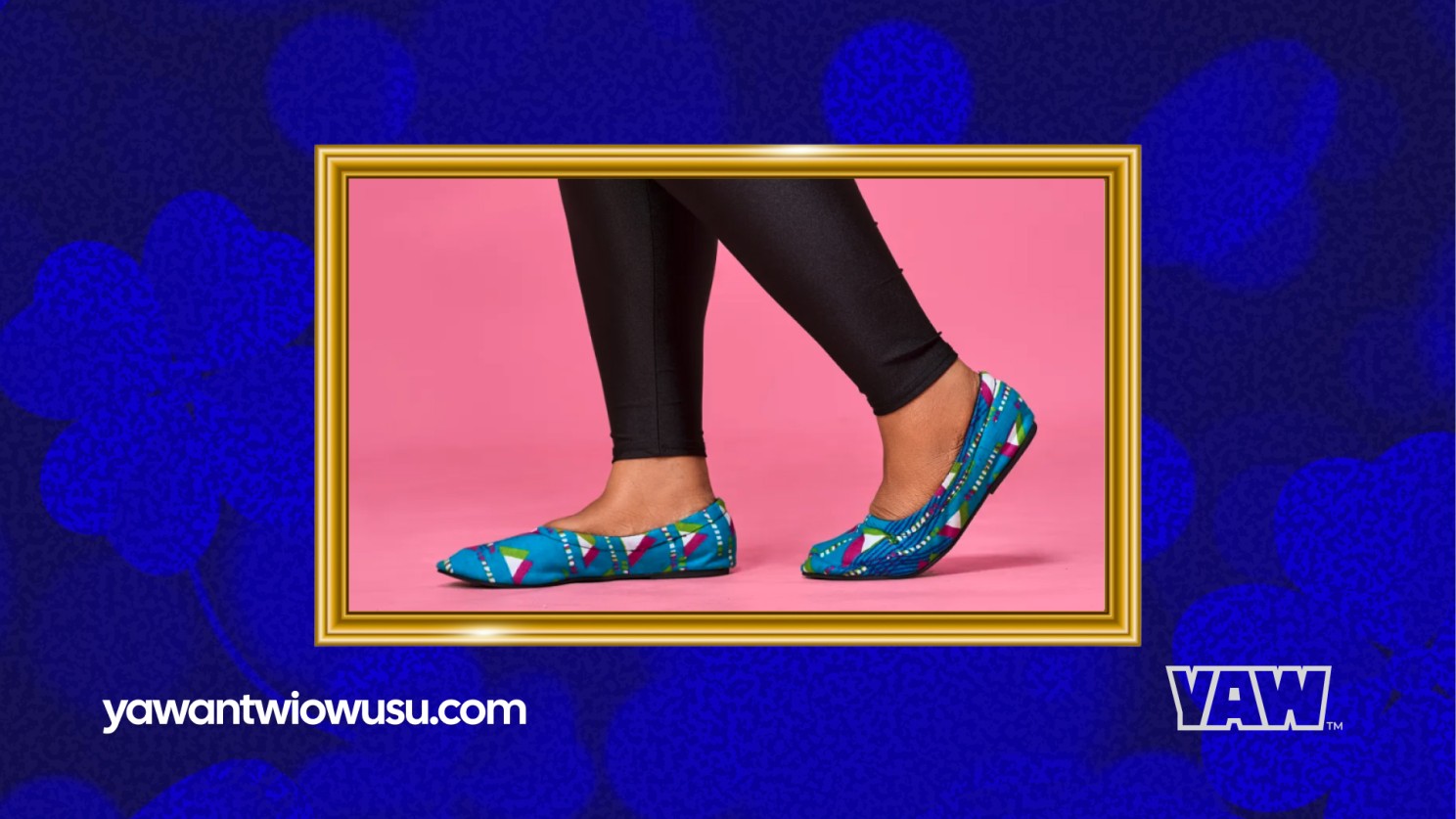
During her recovery, she began reflecting on a recurring problem many women face daily: why comfort and safety in footwear often come at the expense of style. That reflection gave birth to Love Ankara in 2017, built around a simple question, why do women have to choose between safety and fashion?
The result was a uniquely crafted product that led with comfort and safety, rooted in an Afrocentric identity, and designed for the everyday practicality of working women.
Since its launch, Love Ankara has sold over 4,000 pairs of shoes, primarily through digital platforms such as its Paystack Store and social media, a true example of a Ghanaian direct-to-consumer business. The brand has since expanded into additional footwear designs and fashion accessories, while also promoting sustainability by using off-cut and deadstock fabrics, as well as upcycled textiles sourced from local markets, seamstresses, and small-scale textile producers.
Yobbings Cards
4. Yobbings Cards
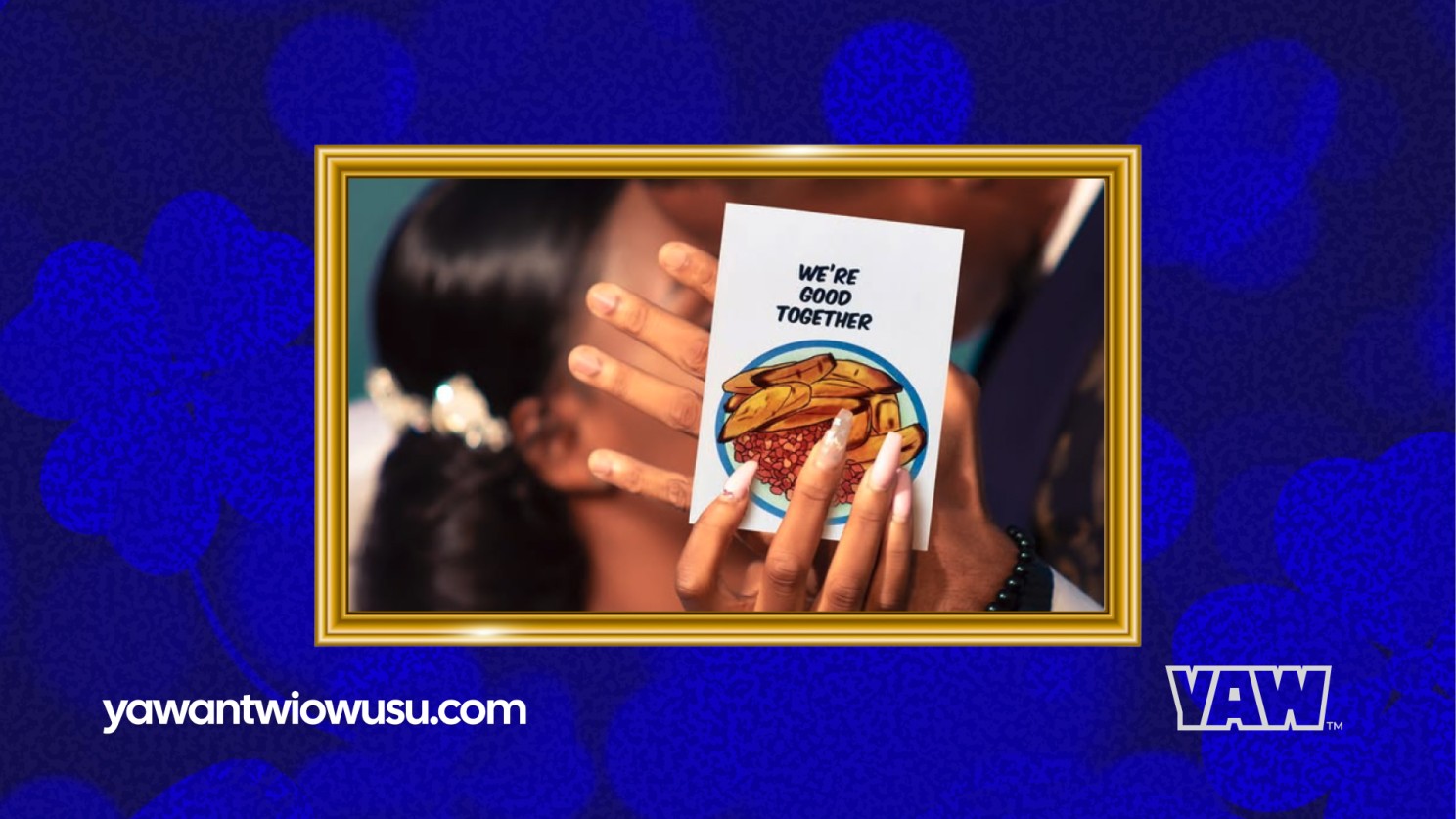
Yobbings was founded in 2015 by poet and creative Ama Asante Diaka, popularly known as Poetra Asantewa, out of a deeply personal frustration: not being able to find a card that expressed love the way she actually felt or spoke. When she struggled to find a card that captured raw, honest affection, she decided to make one herself. That single act became the foundation of the Ghanaian greeting card and paper goods brand we now know as Yobbings.
The cards speak in Twi, Pidgin, and informal English, saying the things people usually feel but rarely find printed on shelves. From intimacy and body positivity to humour that borders on taboo, Yobbings deliberately pushes private conversations into public spaces, challenging what is considered "acceptable" language in mainstream consumer products.
Built as a direct-to-consumer brand, Yobbings owns both its voice and its relationship with its audience. The products are deeply rooted in youth culture, Ghanaian language, and everyday lived experiences, allowing customers to feel seen rather than marketed to. While some retailers initially rejected the cards for being too explicit, demand consistently proved otherwise, with many stores eventually stocking, and selling out, after testing the brand.
Beyond Ghana, Yobbings has found resonance with diaspora communities in cities like New York and Lagos, showing that culturally honest products can travel across borders. At its core, Yobbings is more than a card company; it is a storytelling brand that uses language, humour, and art to reclaim how love, desire, and connection are expressed.
A couple of weeks ago, I saw a Yobbings billboard in town. I was impressed, and genuinely happy. A brand built on creative courage and cultural honesty has not only shaped conversations but gone on to create a sustainable business that has survived for nearly a decade, remaining relevant both financially and culturally.
Why the Social Enterprise Trap Is Dangerous.
1. We lose strong commercial talent to donor-led businesses
My argument isn't that no one should start a social enterprise. It's that it probably shouldn't be the default ambition for many young founders.
The truth is that the social enterprise path is highly over-glamorised. We've all seen social entrepreneurs "make it big" after closing their first major grant from a global donor or foundation. It creates the illusion of scale and impact through perceived numbers, beneficiaries reached, communities touched, pilots launched, numbers that are often easier to manufacture than real revenue.
The danger is that many of our brightest commercial minds end up optimising for grants instead of customers. Yet, as we've seen with all four DTC businesses above, it is entirely possible to build mission-led, profit-making companies that create jobs, shape culture, and scale sustainably. We simply don't talk about these paths enough, so young founders assume they don't exist.
2. Long-term sustainability becomes unpredictable
In a profit-led business, sustainability is largely predictable and controllable. Revenue comes from paying customers, costs can be managed, and growth is directly tied to how much value the business delivers. If customers stop paying, the signal is clear: something needs to change.
Donor-led businesses don't work that way. Sustainability is tied to funding cycles, shifting donor priorities, and external agendas that founders have little control over. A business can be "successful" on paper, reports submitted, milestones achieved, and still collapse the moment funding dries up.
This creates fragile organisations that survive on proposals rather than products, and dashboards rather than demand. Over time, founders become grant managers instead of builders, and businesses struggle to stand on their own two feet without external support.
3. It becomes the easiest way out
For many young founders, calling a venture a "social enterprise" becomes a shortcut, a way to avoid the brutal, uncomfortable work of building something people are genuinely willing to pay for.
It's easier to convince a donor of potential impact than to convince thousands of customers to part with their money. It's easier to pitch a problem than to solve it at scale. And it's easier to measure outputs than to earn trust in a competitive market.
DTC businesses don't offer that escape. They force founders to confront reality early: pricing, distribution, retention, margins, and customer satisfaction. There's nowhere to hide. If the product isn't good enough, people simply don't buy.
That difficulty is precisely why DTC businesses matter. They build discipline, commercial thinking, and resilience, skills that compound over time and create enterprises that can last decades, not just funding cycles.
Sukupon days

Yaw Antwi Owusu & Sukupon team mates in Takoradi Technical University.
I look back at the first social enterprise I founded when I was in the university and I ask myself why I didn't consider it as a commercial business. Yes, it would have been tough, but I also would have learned a ton of things that running a social enterprise simply couldn't teach me. Over the years, I've honed my commercial instincts, but I can only imagine what that journey would have looked like if I had stuck with a commercial business from my university days until now.
If you know any university student or a young founder out there, share this note with them. While we need social enterprises to help balance demands that government isn't responding to, Ghana also has many viable business opportunities worth solving using direct-to-consumer models.
And as a young person, your first bet on entrepreneurship can be more than just a social enterprise.