Don't launch another waitlist, not in 2025 or after
 Yaw Antwi-Owusu
December 1, 20256 min read

Waitlists, as widely known, are one of the "easiest" ways to validate a problem, but they do only half the job. In my first startup, Ubadi, after doing rigorous market research where I led my team to host three focus group discussions and gather over 200 entries for our survey on finance for families with a focus on teenagers, we built a simple landing page to collect email addresses. It was the perfect thing to do as a first-time founder and before this AI era, but it isn't anymore.
Ubadi on the ground

What the waitlist did for us was to collect potential customers' email addresses, but there was no validation metric that they would either use the product when it was ready or even pay for it.
Technology is increasingly becoming easy to build, consumers' taste is rising fast, and you need more than just a couple of email addresses to validate market interest.
So then, what makes waitlists so not 2025 (or near 2026), and how can you do better?
1. Waitlists scream anticipation, but you don't need vanity metrics that early
Anticipation is half the job; your potential customers register their interest, but with a waitlist, you have no way of measuring the intensity of that interest. Are they willing to use a scrappy version zero of your product? Will they pay for it? Will they be engaged by your unique approach to solving the problem? Can you collect data that shapes your next iteration?
The truth is, a waitlist feels done, but it isn't. Founders can and must push the needle to move a step further beyond the norm. Here are some questions that can guide you in your quest to push further:
A. What is the simplest version of this product that I can ship today?
B. How can I get creative in solving this problem in a way that helps me gather customer insights beyond emails?
C. What metric will be important to measure customer interest intensity, and how do I put a product in front of the customer that helps me measure that?
2. Waitlists are easy to build and create fake momentum
Momentum is the lifeblood of startups, revenue, customer usage, investor interest, onboarding an excellent founding team, shipping product, etc. Going the waitlist route means your waitlist becomes version zero of your product, and every customer who registers becomes a boost to your confidence as a founder edging close to pre-PMF… but in the grand scheme of things, those adrenaline spikes are fake and mean less.
I have been here. I have designed decks and proudly put the number of waitlisters as "traction." But was it?
In the early days, real traction feeds into real momentum, which then pre-tests your systems before you hit version one. This means your product will have to push a little harder to get a version zero that helps you answer questions A, B and C; engineering will have to push harder and build version zero so it doesn't break just yet; business and sales will have to sell version zero. This actually requires everyone to push the envelope while we all wait for polished version one — and it also gets the consumer working, testing and using version zero.
And that's real momentum. Teams are moving, consumers are testing and using, and customer interest intensity is being accurately measured.
Instead of a waitlist, I have adopted the version zero mentality, a version that isn't the product just yet, but also isn't a waitlist. I have piloted this in two products: one I led product operations for and another I founded.
Kero
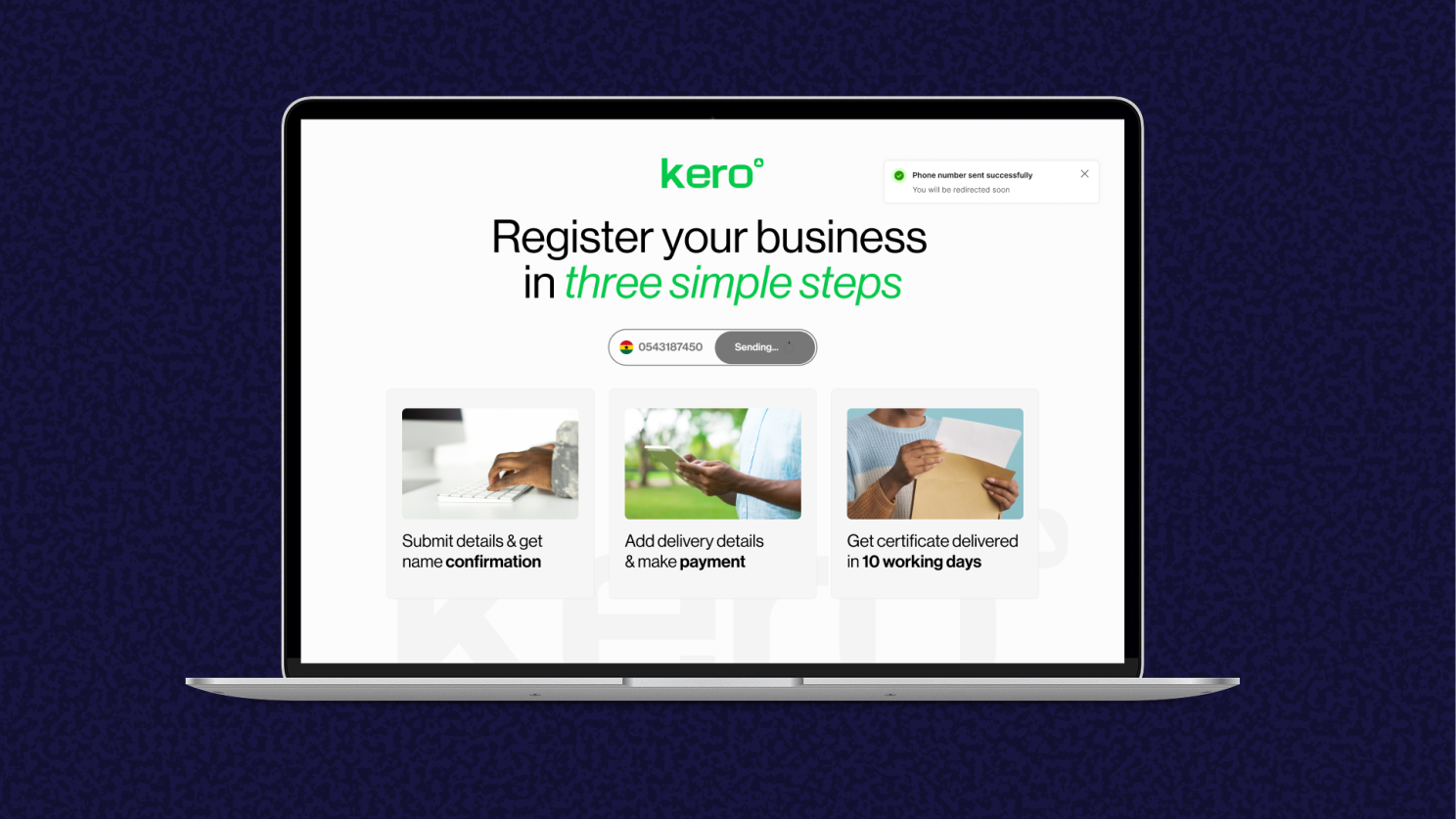
Version zero mentality at Kero.
Kero was a platform to help businesses in Ghana formalise their operations seamlessly from the comfort of their homes and get it done on time in just three steps. After leading market research for it and talking to business owners who had registered businesses and those interested in formalising theirs, it was validated that yes, this is a platform consumers are willing to pay for, in theory. But we had to validate it.
I led the team to build a simple fixed-screen landing page that did just one thing: collect leads of people who wanted to register their business and pay for it. The version zero worked, but it also tested the capacity of the team, and that's where it failed. The market was ready, but the team wasn't.
Printmote

Version zero mentality at Printmote.
After implementing version zero in gathering customer-interest intensity at Kero, when I decided to build the infrastructure that powers the print economy in Africa, I used the same VZ mentality here. I built a version of the platform that allowed customers to simply send their print order to Printmote and get it printed and delivered to their doorstep. The first version was built one weekend using Cursor and on June 1st, the product was live and ready to be tested.
There were no waitlist moments, not because we couldn't have built one, but because it would have served no purpose. Printmote, even with its version zero, has generated significant revenue that validates far more than any number of email addresses we would have gathered from a waitlist.
Version zero gave us the opportunity to interact with real businesses and event organisers, helped us build trust, and helped us learn from both our customers and our fulfilment partners. We have experienced the good, the best and the ugly, all of which are actively shaping our version one and roadmap. Something a bunch of email addresses could never do.
And yes, I know you may be thinking this approach may not work for every industry, especially regulated markets. If I were to launch Ubadi again with all I know today, our version zero would have been a paid edtech product that trains teenagers about finance while we were figuring out the regulatory landscape.
There is a version zero in every industry. It's your job to find it, and I am rooting for you.